

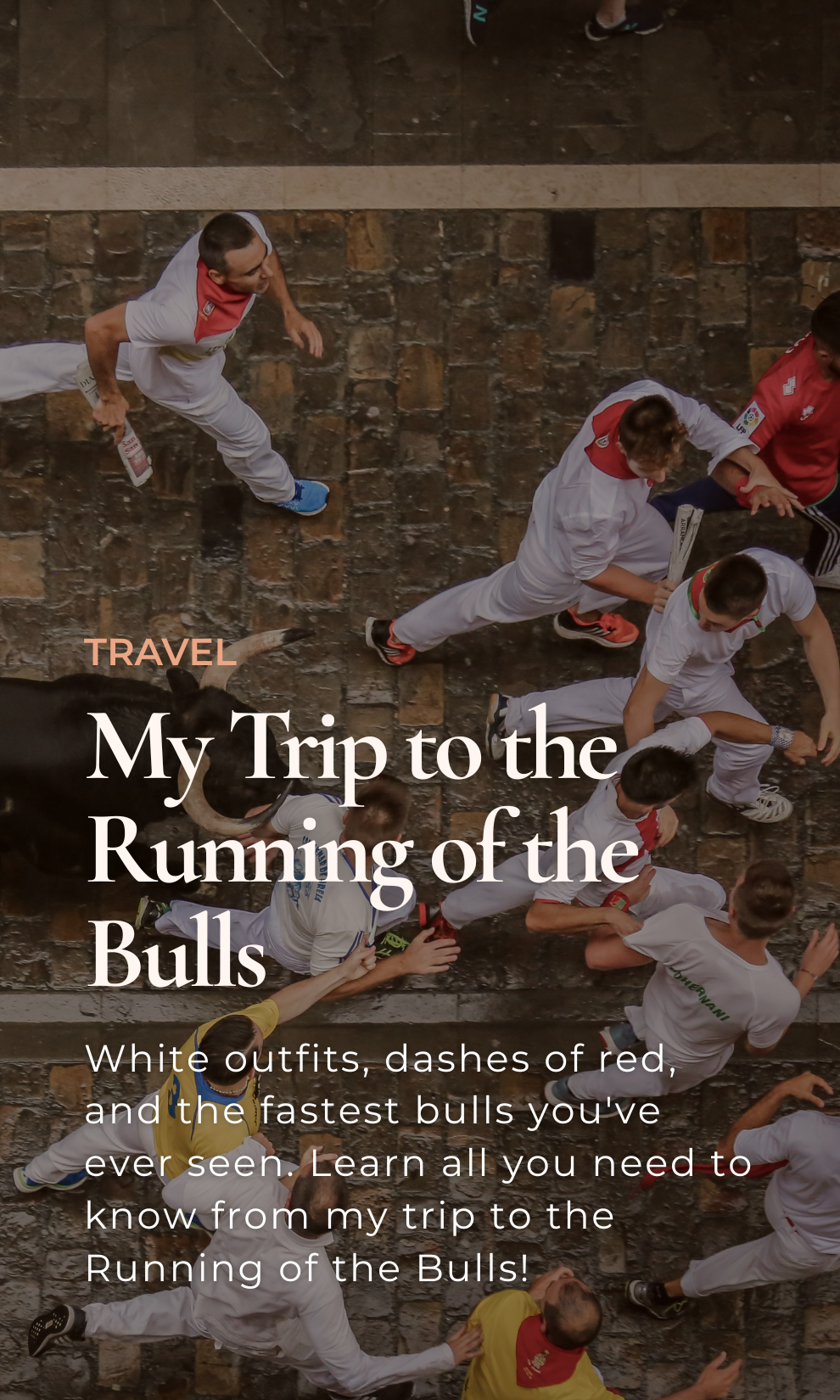
You’ve seen it before: white shirts and red scarves, tiny Spanish streets, and a herd of bulls running through a crowd. That’s right, we’re talking about the one and only Running of the Bulls!
If you didn’t know, the Running of the Bulls, or Encierro, is part of the San Fermin Festival, a party thrown every year in Pamplona, Spain. It’s one of the world’s most famous fiestas, and it stretches back over 800 years!
I got to visit for the first time and it was a blast! If you love extreme sports, pageantry and age old traditions, you’ll love it too. Get all the details from my visit in this article!
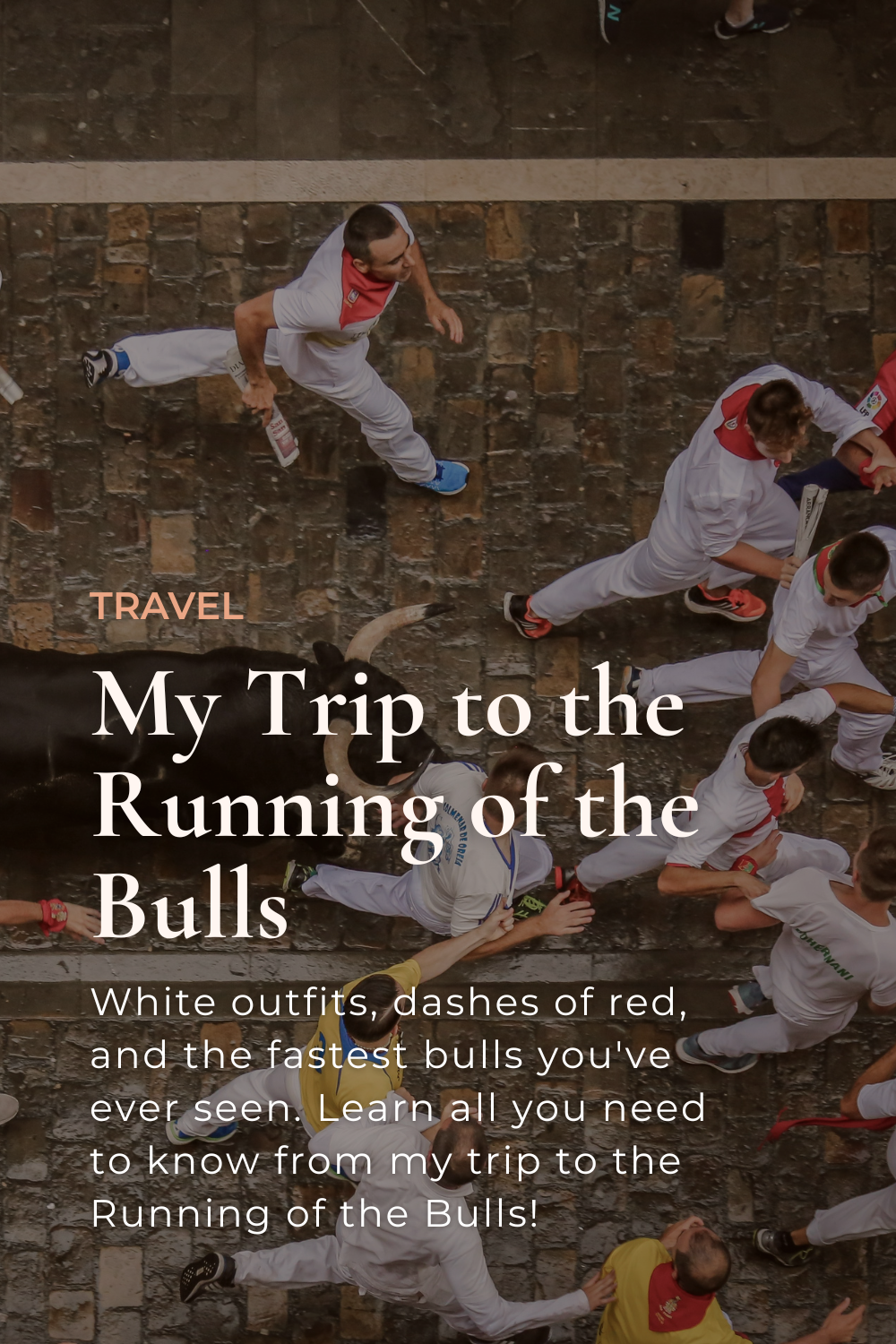
What is the Running of the Bulls?
The Running of the Bulls is a Spanish tradition that takes place in Pamplona for 7 days each July. Participants from all over the world join to run from bulls as part of a holy celebration.
The San Fermin Festival was created in the 12th century to celebrate Saint Fermin, a Pamplonan who became the first bishop of Amiens, France. He was martyred in the 3rd century under the Roman Emperor Diocletian. The festival began as a feast that was held in his honor in October. It moved to July when the city council merged it with the summer livestock fair.
The bull run began because the bulls needed to be moved from the outside of the city to the center. They used to be herded, but in the early 1900s people began to run in front of the bulls instead of walking beside them—just like that, el Encierro was born!
The festival schedule is packed with activities!
Opening Ceremony, July 6th
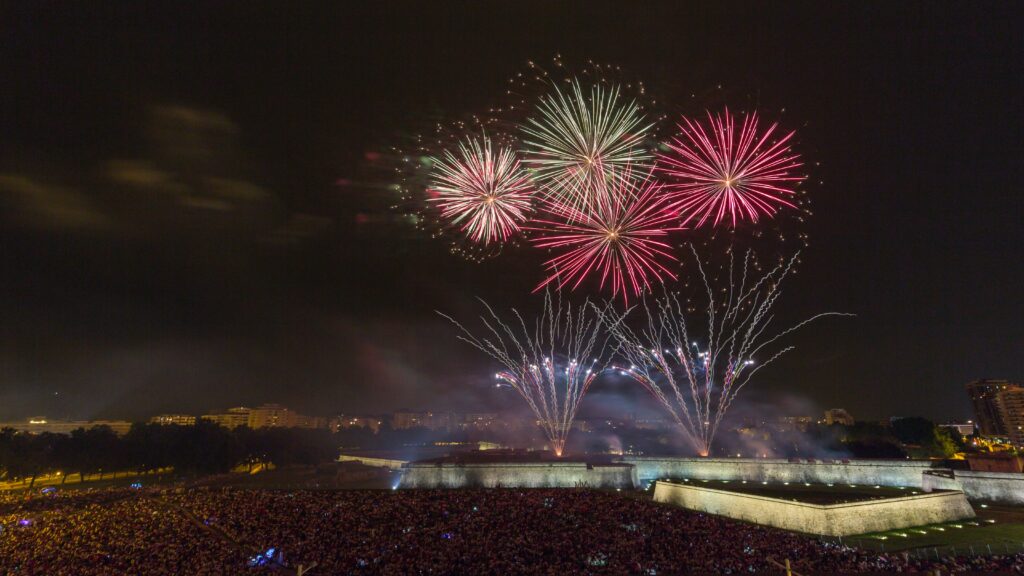
The ceremony opens with El Chupinazo, where the festival participants fill the City Hall Square in their all–white outfits. The mayor gives a welcome speech, launches a rocket from the balcony of Town Hall, and ends the celebration with a champagne and sangria spray!
Following that is an unofficial and deeply ingrained tradition, the Riau-Riau dance. In this procession, leaders and residents of the town sing and dance the traditional Astrain Waltz in the streets!
The San Fermin Procession, July 7th
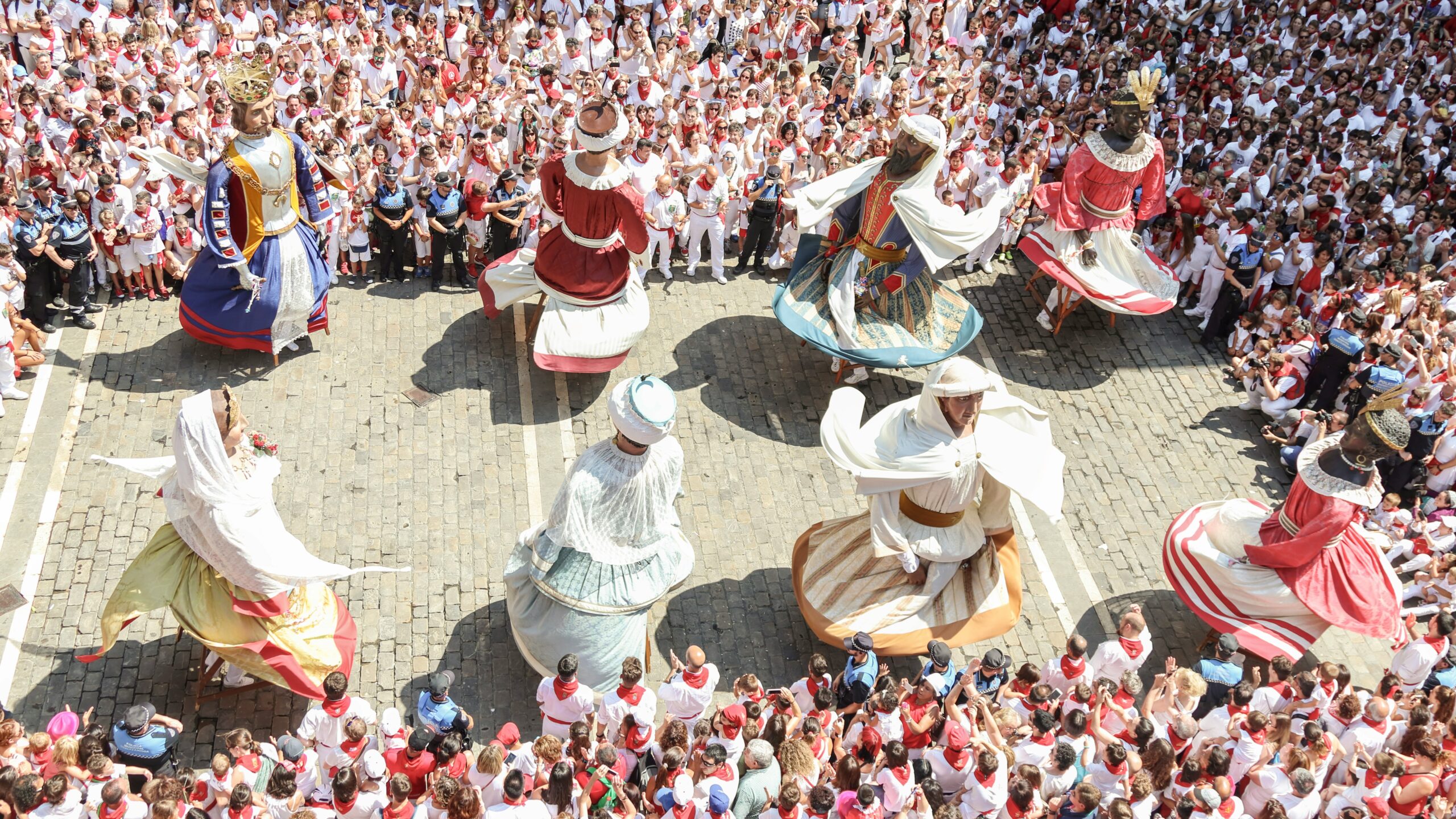
On the morning of the 7th, the San Fermin Procession takes place, starting at the San Lorenzo Church and ending in the heart of Old Town. In this parade, a large statue of Saint Fermin is pushed through the streets of the town with singers, dancers, and more!
El Estruendo
El Estruendo is another unofficial and very important part of the Festival. Just before midnight on a chosen day of the week, the town’s people gather together to do one thing: make noise! People bring instruments, whistles, and even pots and pans to bang in the streets—all to get the people excited!
A Piece from Our Collection
Amour Abroad Spiral Notebook
Capture every moment in the Amour Abroad Spiral Notebook. Shop yours below!
The Running of the Bulls, July 7th – July 14th
The bull run starts on July 7th and happens every morning until the closing ceremony on July 14th. 6 fighting bulls and 6 steers run 875 meters to El Plaza de Toro, the bullring, where matadors wait to fight them. The fighting bulls are aggressive, while the steers are calm, there to guide the bulls.
Closing Ceremonies, July 14th
Last is the closing ceremony Pobre de Mi, a candlelit goodbye where the mayor gives the ending speech and the crowd sings the song Pobre de Mi, wishing the Festival adiós until next year!
To participate in the bull run, click here! It’s completely free. If you decide that you want to join later on, no worries! Be at the Pamplona Town Hall no later than 7:30 a.m. and be sure you meet the requirements below:
- At least 18 years old
- Sober
- Wearing running shoes
- Can’t carry anything—bags, phones and other items are prohibited!
Get the official rules here!
My Visit
Day 1
I got to Pamplona during the last few days of the festival. I took the high-speed train from Barcelona, a swift 4 hour ride through the Spanish countryside. It was a beautiful stretch full of old towns and a centuries-old aqueduct!
A hotel van met us at the train station. They had everything scheduled out, including getting the runners from our group to intake. After getting settled, we headed to El Plaza de Toro for the bull fight, which is not for the faint of heart (which I quickly found out I was)!
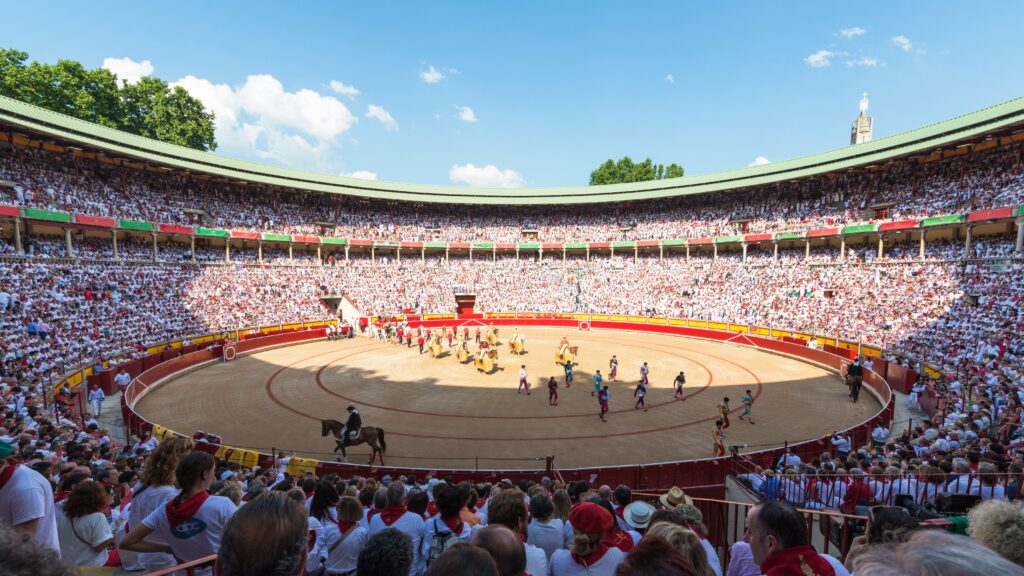
The bullfight is majestic. The arena is massive, a superstructure in the center of a small and simple town. As you walk toward it, you can hear the cheers of the spectators inside!
I got snacks and sat down just in time to see the first matadors come out. These men are artists, performing from the moment they step out! Their suits are all different colors and decorated with sequins.
The crowd’s energy went through the roof as the bulls came out. The fight is just like what you see on TV: a man with a large cape, swooping it under and over as the bull misses him.
I recommend watching at least the first few fights. The festival isn’t the same without it!
Day 2
On day 2, I took a tour around Pamplona. Pamplona is over 2,000 years old! It was founded as a Roman city in 75 AD, and it holds firm to its roots. Imagine a Spanish city with its cobblestone streets and winding alleys. Pamplona is the same, but tighter!
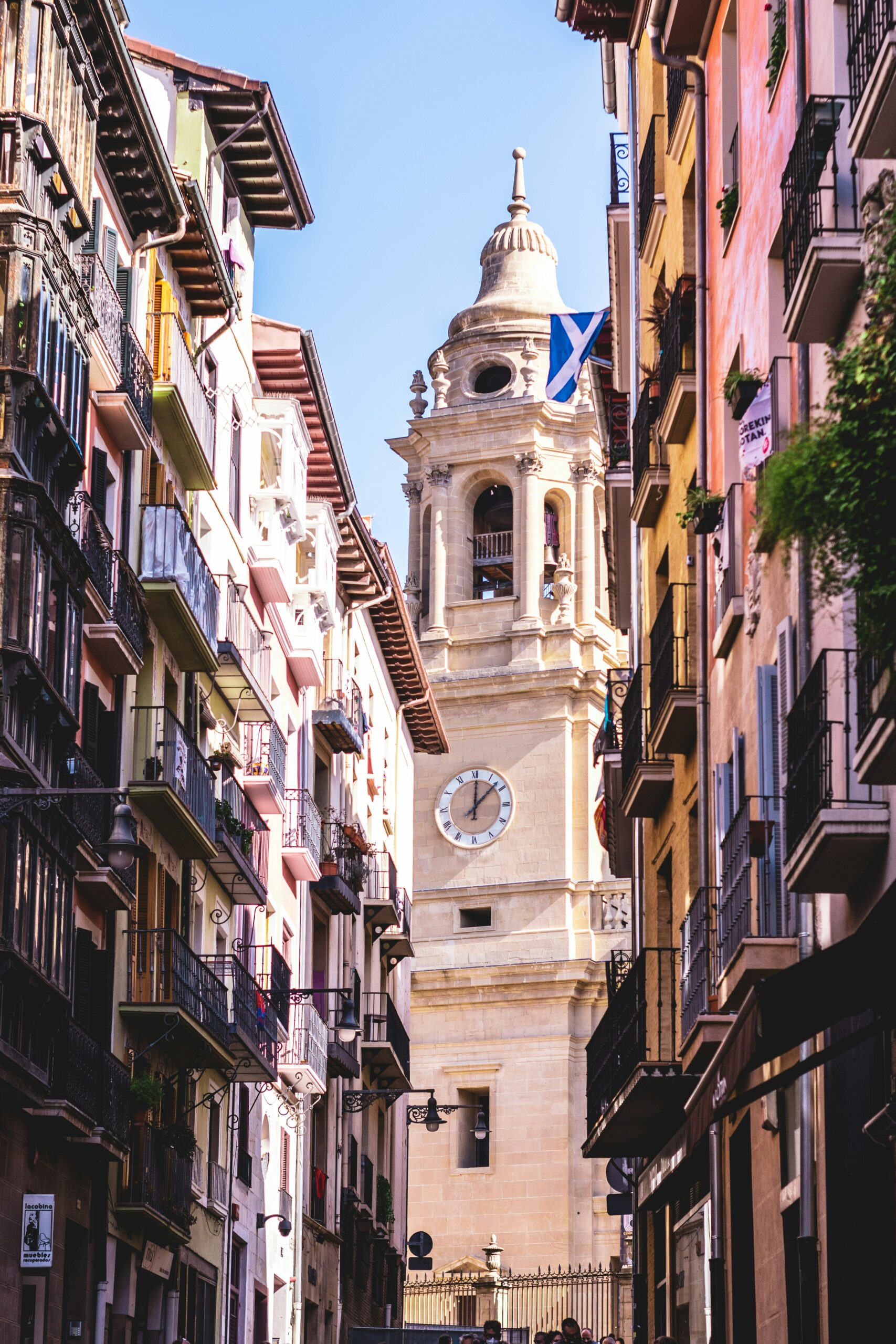
We started near the San Lorenzo Church and explored the area, learning about the history of the festival and the bull run. I finished with a bocadillo for lunch, a Spanish sandwich made with a long loaf of bread, fresh tomatoes, and the Iberian specialty jamon.
Day 3
On day 3, I slept. Pamplona’s weather is hot in the summer—each day averages about 83°F. If you need rest during the activities, take some! You want to be refreshed and healthy for the bull run.
The Final Day
Day 4 was the bull run, and it was awesome! I woke up before the sunrise to board the bus to town. By 7 a.m. I was on the way to the apartment where I would watch the run. There was such a jovial spirit among everyone as we walked. The sun began rising over sparse streets; by the time it was shining, they were filled with a sea of white and red!
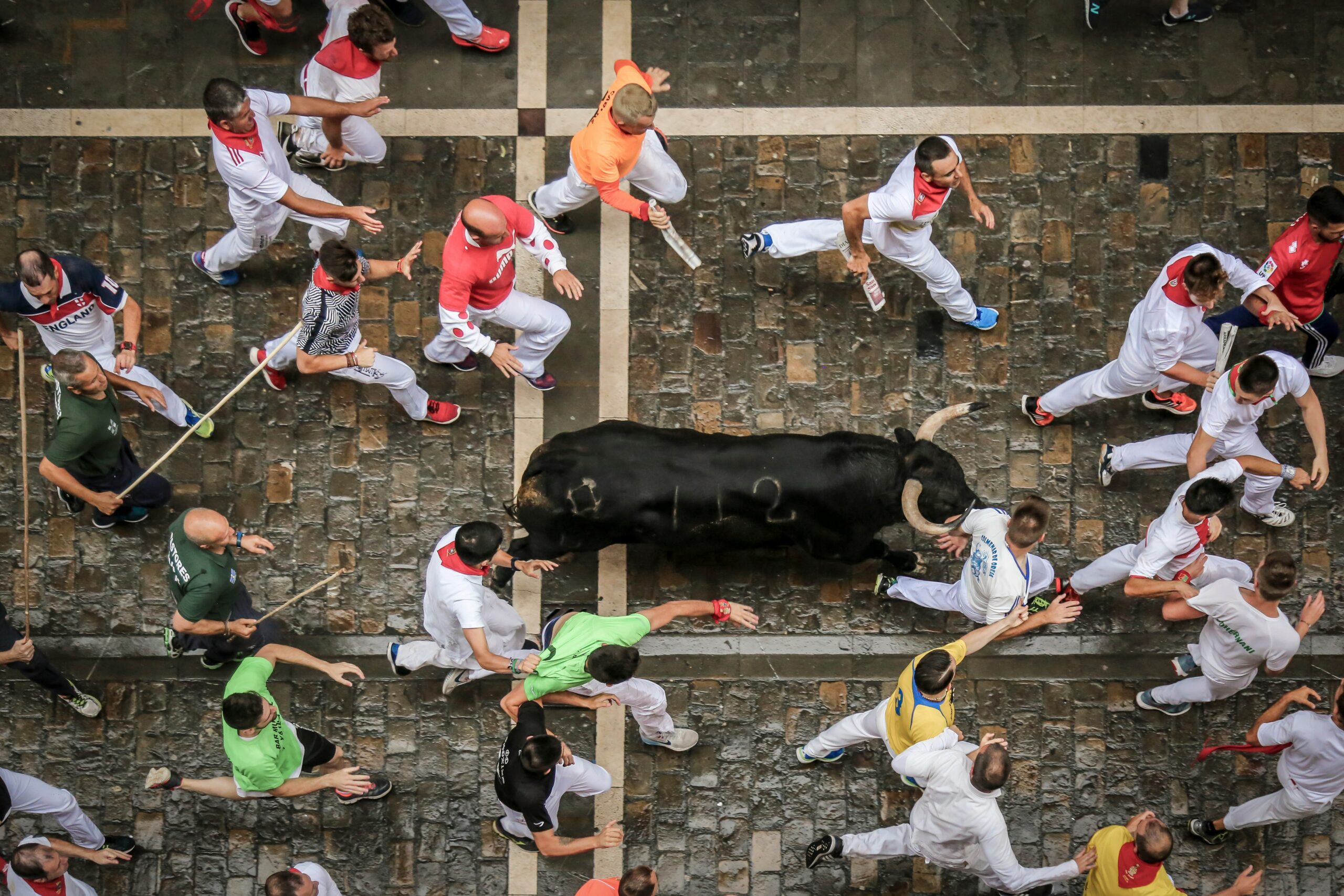
The race started just before 8 a.m. The unit I watched from was across from Dead Man’s Corner, the part of the route where both people and bulls make a 90 degree turn.
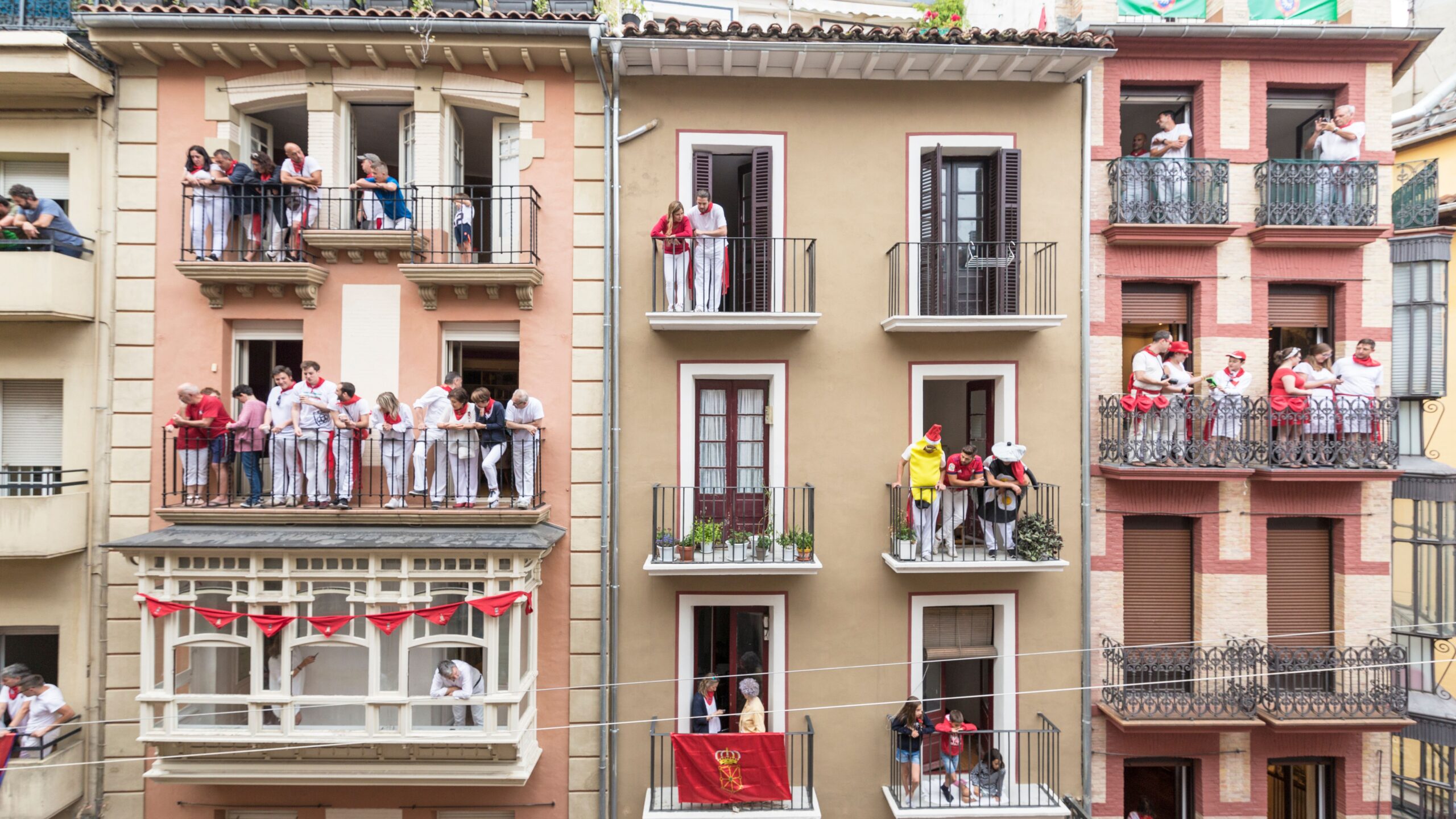
I was so antsy while I waited! The runners warm up while people come up to watch from the balconies. When you look around, there’s nothing but festival participants waving their red bandanas and cheering as the start time gets closer. Everyone’s in it together, praying for the runners and the bulls!
When I saw the bulls, I screamed! They’re large and powerful, shaking the ground as they run down the lane. You can’t help but worry for the runners, especially as they all start to turn. The race only lasts a few seconds because the animals go at nearly 30 mph. Before long, runners have to move to the side.
I (safely) had the time of my life. When it comes to extreme activities, this one is a must-watch!
How to Get There
Pamplona is located in the northeast of Spain, approximately 4 hours from Barcelona by train. You can take a plane to the Madrid (MAD) or Barcelona (BCN) airports, then rent a car or ride the train from there, or you can fly to Pamplona’s airport (PNA) and take a taxi to the city.
Private transportation is available as well.
For more information on transportation, click here!
Getting Around
If you are staying in the city, you’ll be able to walk to most of the events. Pamplona is a very walkable city, with a structure that still echoes medieval times.
If you decide to stay in a hotel outside of the city, you’ll need to ride in. Check with your hotel to find out if they offer a van service, or take the bus!
Editor’s Pick

Amour Abroad Hoodie
Travel comfortably in the Amour Abroad Hoodie. Shop it below.
Where to Stay
Because Pamplona is a town of only 200,000, hotels must be booked in advance!
The Running of the Bulls offers packages that include accommodation, meals, transportation, and a balcony to watch the run from! Give them a look here—they make the trip so much easier.
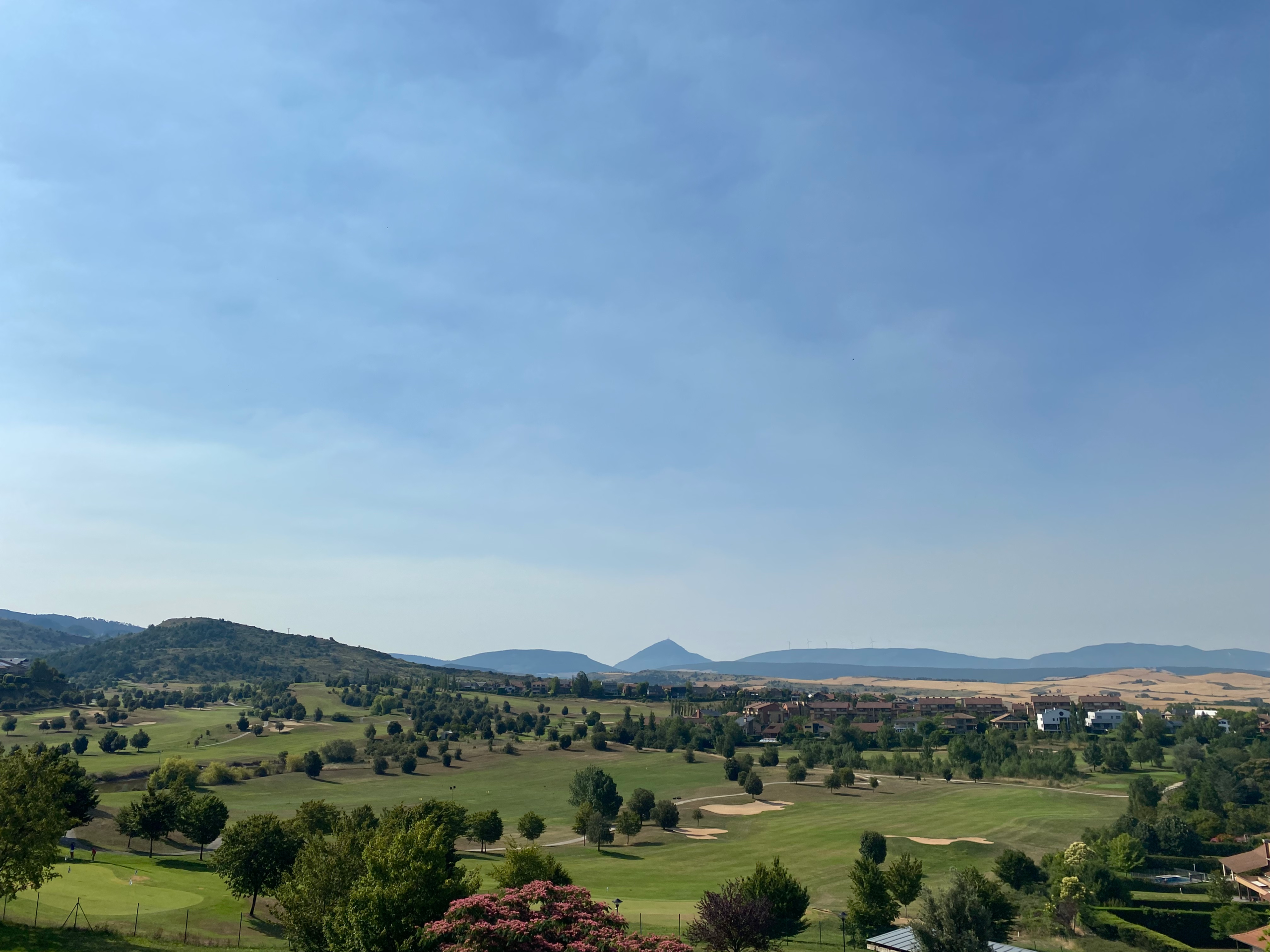
I got to stay at the beautiful Hotel Castillo de Gorraiz, just outside of the city. The hotel is built around a restored 16th century castle. It sits atop the stunning green hills that surround Pamplona, giving you an amazing view of the area.
After spending all day out in the sun, it’s nice to rest in the peaceful country!
Press this link to learn more!
What to Wear
The outfit for the San Fermin Festival is famous around the world: a white shirt and pants, a red sash around your waist, and a red bandana around your neck. You don’t have to wear it, but it’s highly recommended!
Buy your outfit here!
The Route
The bull run goes through Pamplona’s oldest part of town. It starts on Santo Domingo, turns onto Mercaderes, turns again on Estafeta, and ends in the bullring—a total of 875 meters! Below are 3 key parts of the route:
Calle de Santo Domingo – The beginning of the route and widely known as the most dangerous! This street has a slight incline and is lined by ancient walls.
The Dead Man’s Corner, or La Curva – This is the final turn on the route! In this section the bulls run into the barricade because of their speed and weight.
Calle de la Estafeta – The longest stretch of the run at 300 meters! Once the bulls get their bearings, it’s impossible to outrun them!
Keep these in mind if you plan to run! For more information, visit their website here.
Rent a Balcony to Watch
Get away from the crowds and see the run from above! The Running of the Bulls rents out balconies so you can watch with maximum comfort. Click here to take a look!
Summary
The San Fermin Festival is a 9 day festival created to celebrate the gospel of Jesus Christ. From bull runs to candlelit ceremonies, this tradition is full of excitement, adrenaline and memories to be made!
The festival includes el Chupanizo and the Riau-Riau dance, the San Fermin Procession, el Estruendo, the Running of the Bulls, and so much more. For thrilling sports and beautiful traditions, this celebration is one you have to see!
Thanks for Reading
Would you participate in the Running of the Bulls? Let me know in the comments!


Leave a Reply