

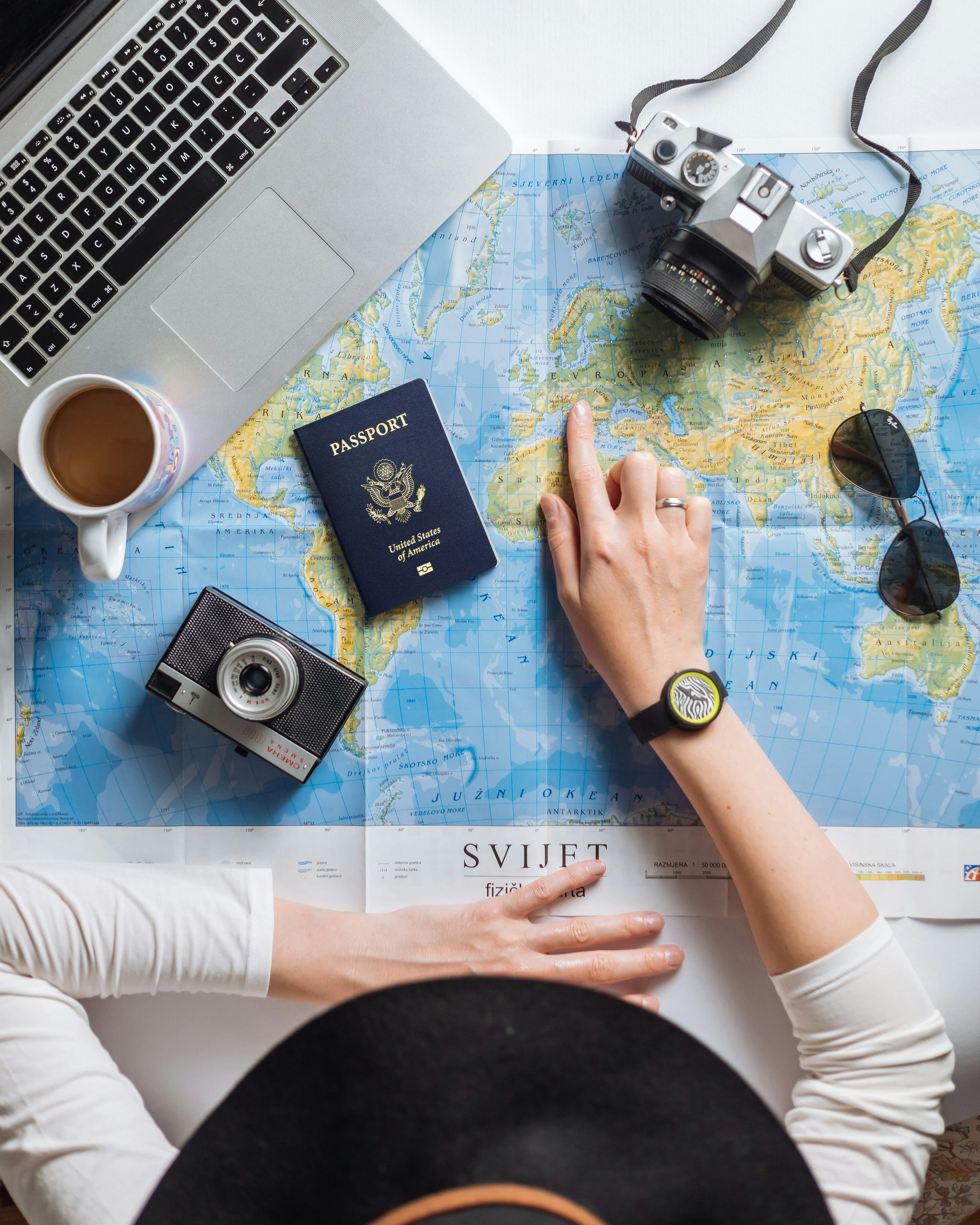
Your itinerary is saved, your carry-on is packed, and you layed out your airport fit. There’s just one thing missing: you need to find the train station, ask how much something costs, and figure out whether a shop accepts cards—but where you’re going, they don’t speak English. A few words in the local language can make all the difference!
Whether you’re planning a weekend in Paris, a summer in Barcelona, or a long-awaited trip to Tokyo, these 5 everyday travel phrases will help you get around with confidence. Save this guide to your phone before your next international getaway!

1. French
Bonjour, Paris! From shopping along charming streets to ordering your morning café, these phrases will come in handy.
- Where is the train station? — Où est la gare ? (oo eh lah gahr)
- Can I pay by card? — Est-ce que je peux payer par carte ? (ess-kuh zhuh puh pay-yay par kart)
- How much does this cost? — Combien ça coûte ? (kom-byen sah koot)
- Where is the bathroom? — Où sont les toilettes ? (oo sohn lay twah-let)
- Can you help me, please? — Pouvez-vous m’aider, s’il vous plaît ? (poo-vay voo meh-day, seel voo pleh)
Local tip: Start with bonjour (hello) before asking a question. It’s a simple way to be polite when you enter a shop or ask someone for help.

2. Spanish
From Barcelona’s shopping streets to Madrid’s tapas bars, these five phrases are worth saving.
- Where is the train station? — ¿Dónde está la estación de tren? (DOHN-day es-TAH lah es-tah-SYOHN day tren)
- Can I pay by card? — ¿Puedo pagar con tarjeta? (PWEH-doh pah-GAR kohn tar-HEH-tah)
- How much does this cost? — ¿Cuánto cuesta esto? (KWAN-toh KWEHS-tah EHS-toh)
- Where is the bathroom? — ¿Dónde está el baño? (DOHN-day es-TAH el BAH-nyoh)
- Can you help me, please? — ¿Me puede ayudar, por favor? (meh PWEH-day ah-yoo-DAR por fah-VOR)
Local tip: In Spain, you may see aseos or servicios on restroom signs. Look for those words when you’re out exploring!
Editor’s Pick
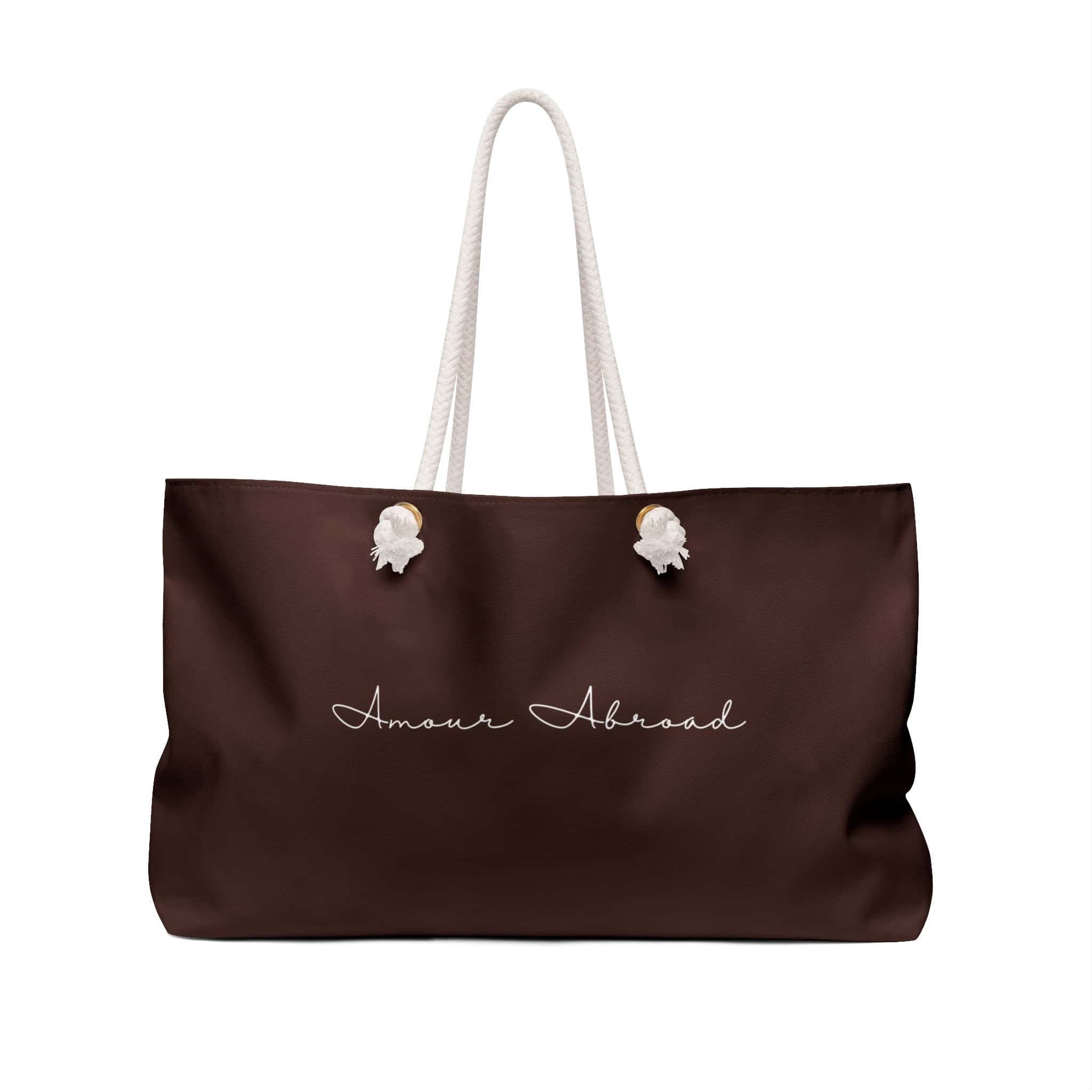
Amour Abroad Tote
For everything that won’t fit in your carry-on. Buy the tote below!
3. Dutch
From Amsterdam’s canals to Rotterdam’s modern architecture, these Dutch phrases can help you get around, shop, and enjoy your city break.
- Where is the train station? — Waar is het treinstation? (vahr iss hut TRAIN-stah-shun)
- Can I pay by card? — Kan ik met kaart betalen? (kan ik met kahrt buh-TAH-lun)
- How much does this cost? — Hoeveel kost dit? (hoo-VAYL kost dit)
- Where is the bathroom? — Waar is het toilet? (vahr iss hut twah-LET)
- Can you help me, please? — Kunt u mij alstublieft helpen? (kunt oo may ahls-too-BLEEFT HEL-pun)
Local tip: Many people in the Netherlands speak English, especially in tourist areas. Still, starting with hallo (hello) or goedemorgen (good morning) is a friendly way to begin a conversation.
4. Turkish
Visiting Istanbul, exploring Cappadocia, or browsing a local bazaar? These Turkish phrases are a great place to start.
- Where is the train station? — Tren istasyonu nerede? (tren ees-tah-SYOH-noo neh-reh-DEH)
- Can I pay by card? — Kartla ödeyebilir miyim? (KART-lah uh-duh-yeh-bee-LEER mee-yim)
- How much does this cost? — Bu ne kadar? (boo neh kah-DAR)
- Where is the bathroom? — Tuvalet nerede? (too-vah-LET neh-reh-DEH)
- Can you help me, please? — Bana yardım edebilir misiniz, lütfen? (bah-NAH yar-DUHM eh-deh-bee-LEER mee-see-NEEZ, LOOT-fen)
Local tip: Learn teşekkür ederim (thank you). It’s a useful phrase to know after someone gives you directions or helps you make a purchase.
5. Italian
Rome, Florence, Venice—wherever your Italian adventure takes you, these phrases will help you navigate the day.
- Where is the train station? — Dov’è la stazione ferroviaria? (doh-VEH lah stat-see-OH-neh fehr-roh-vee-AH-ree-ah)
- Can I pay by card? — Posso pagare con la carta? (POS-soh pah-GAH-reh kohn lah KAR-tah)
- How much does this cost? — Quanto costa? (KWAN-toh KOH-stah)
- Where is the bathroom? — Dov’è il bagno? (doh-VEH eel BAH-nyoh)
- Can you help me, please? — Può aiutarmi, per favore? (pwoh ah-yoo-TAR-mee, pehr fah-VOH-reh)
Local tip: Buongiorno means “good morning” or “good day,” while buonasera means “good evening.” Try one when entering a shop or restaurant.
6. Portuguese
Visiting Rio de Janeiro, exploring São Paulo, or relaxing on Brazil’s beautiful beaches? These Portuguese phrases are a great place to start.
- Where is the train station? — Onde fica a estação de trem? (OHN-jee FEE-kah ah es-tah-SOWN jee TRENG)
- Can I pay by card? — Posso pagar com cartão? (POH-soo pah-GAR kohng kar-TOWN)
- How much does this cost? — Quanto custa isso? (KWAN-too KOOS-tah EE-soo)
- Where is the bathroom? — Onde fica o banheiro? (OHN-jee FEE-kah oo bahn-YAY-roo)
- Can you help me, please? — Você pode me ajudar, por favor? (voh-SAY POH-jee mee ah-zhoo-DAR, poor fah-VOR)
Local tip: Learn obrigado or obrigada (thank you). It’s a useful phrase to know after someone gives you directions or helps you make a purchase. Men typically say obrigado, while women typically say obrigada.
7. German
From Berlin’s cafés to Munich’s markets, these German phrases can make everyday errands easier.
- Where is the train station? — Wo ist der Bahnhof? (voh ist dair BAHN-hohf)
- Can I pay by card? — Kann ich mit Karte bezahlen? (kan ikh mit KAR-tuh buh-TSAH-lun)
- How much does this cost? — Wie viel kostet das? (vee feel KOS-tet dahs)
- Where is the bathroom? — Wo ist die Toilette? (voh ist dee twah-LET-uh)
- Can you help me, please? — Können Sie mir bitte helfen? (KUR-nen zee meer BIT-tuh HEL-fen)
Local tip: Entschuldigung means “excuse me” or “sorry.” It’s a good word to learn before asking someone for directions.
8. Japanese
Exploring Tokyo, visiting Kyoto’s temples, or catching a train to your next stop? Save these Japanese phrases to your travel notes.
- Where is the train station? — 駅はどこですか? (Eki wa doko desu ka? — EH-kee wah DOH-koh dess kah)
- Can I pay by card? — カードで払えますか? (Kādo de haraemasu ka? — KAH-doh deh hah-rah-eh-MAHSS kah)
- How much does this cost? — これはいくらですか? (Kore wa ikura desu ka? — KOH-reh wah ee-KOO-rah dess kah)
- Where is the bathroom? — トイレはどこですか? (Toire wa doko desu ka? — TOY-reh wah DOH-koh dess kah)
- Can you help me, please? — 手伝っていただけますか? (Tetsudatte itadakemasu ka? — teh-tsu-DAHT-teh ee-tah-dah-keh-MAHSS kah)
Local tip: Look for the character 駅 on signs. It means “station,” and spotting it can help you find your way around Japan’s extensive train network.

9. Mandarin Chinese
For a trip to Beijing, Shanghai, or another Mandarin-speaking destination, these phrases are a practical starting point.
- Where is the train station? — 火车站在哪里? (Huǒchēzhàn zài nǎlǐ? — hwaw-chuh-jahn dz-eye nah-lee)
- Can I pay by card? — 可以刷卡吗? (Kěyǐ shuākǎ ma? — kuh-yee shwah-kah mah)
- How much does this cost? — 这个多少钱? (Zhège duōshǎo qián? — juh-guh dwaw-shaow chyen)
- Where is the bathroom? — 洗手间在哪里? (Xǐshǒujiān zài nǎlǐ? — shee-show-jyen dz-eye nah-lee)
- Can you help me, please? — 你能帮我一下吗? (Nǐ néng bāng wǒ yíxià ma? — nee nung bahng waw ee-shyah mah)
Local tip: Mobile payment apps are widely used in China, and some shops may not accept international bank cards directly. Check your payment options before you go, and have a backup method ready.
10. Icelandic
Exploring Reykjavík or taking a road trip along Iceland’s stunning coast? These phrases will help you with everyday questions.
- Where is the bus stop? — Hvar er strætóstoppistöðin? (kvar er STRAI-tos-stop-is-tuh-thin)
- Can I pay by card? — Get ég borgað með korti? (get yeg BOR-gath meth KOR-tee)
- How much does this cost? — Hvað kostar þetta? (kvath KOS-tar THET-tah)
- Where is the bathroom? — Hvar er salernið? (kvar er SAH-ler-nith)
- Can you help me, please? — Geturðu hjálpað mér, vinsamlegast? (GEH-tur-thu HYOWL-path myer, VIN-sah-ley-gast)
Local tip: Iceland doesn’t have a public passenger train network, so asking for the bus stop is more useful than asking for a train station. If you’re heading beyond Reykjavík, check bus schedules and tour transport options before setting out.
Editor’s Pick
Amour Abroad Tote
For everything that won’t fit in your carry-on. Buy the tote below!
A Few Travel Tips Before You Go
- Practice out loud! Reading a phrase is one thing; saying it to another person is another. Practice the phrases you expect to use most, and don’t worry about having a perfect accent.
- Download your essentials. Save this article, take screenshots of the phrases, or download an offline translation app. You’ll be glad to have them when Wi-Fi is unreliable.
- Keep a backup payment method. Asking whether you can pay by card is helpful, but acceptance varies by country and business. Carry a little local currency where practical, and check your bank’s international fees before departure.
- Be polite and patient. A greeting, a smile, and a sincere attempt to speak the local language can make an everyday exchange feel much easier. If you’re unsure how to pronounce a phrase, show it on your phone.
Travel is full of little moments that make a trip memorable: finding the right platform, ordering something delicious, or discovering a shop you hadn’t planned to visit. You don’t need to be fluent to enjoy them. Learn a few useful phrases, keep your curiosity close, and let the adventure unfold.
Thanks for Reading!
What language are you learning? Share it in the comment section to encourage someone!



Leave a Reply